

Spot my biggest time-waster

A small business consultant who starts with how your team works

Straight answers for teams of two or more. Which tools to use and what to fix first. Then a rollout that keeps everyone on board.

  • Small startone job proven before anything bigger
  • Plain rulesone page your team will follow
  • Monthly check-insas the tools change, the plan does too

Most teams don't need more tools

They need to know which of the tools they already have to use, and for what. Most small offices pay for Microsoft 365 or Google Workspace, a phone system, an accounting program and three or four apps someone signed up for once. Half of it goes unused.

A back-office desk with a laptop, invoices and a phone, downtown Idaho Falls through the window
An owner in a bike shop typing on a phone at the counter

Then AI arrives, and everybody does their own thing. One person pastes customer emails into a free chatbot. Another refuses to touch it. The owner reads an article about agents and wonders if they're falling behind.

Guidance puts one plan behind all of that.

I look at where your team's hours go. We decide together what to fix first. Then we roll it out at a pace people can keep up with. AI is part of the toolkit. The goal is a team that gets more done in a normal working day.

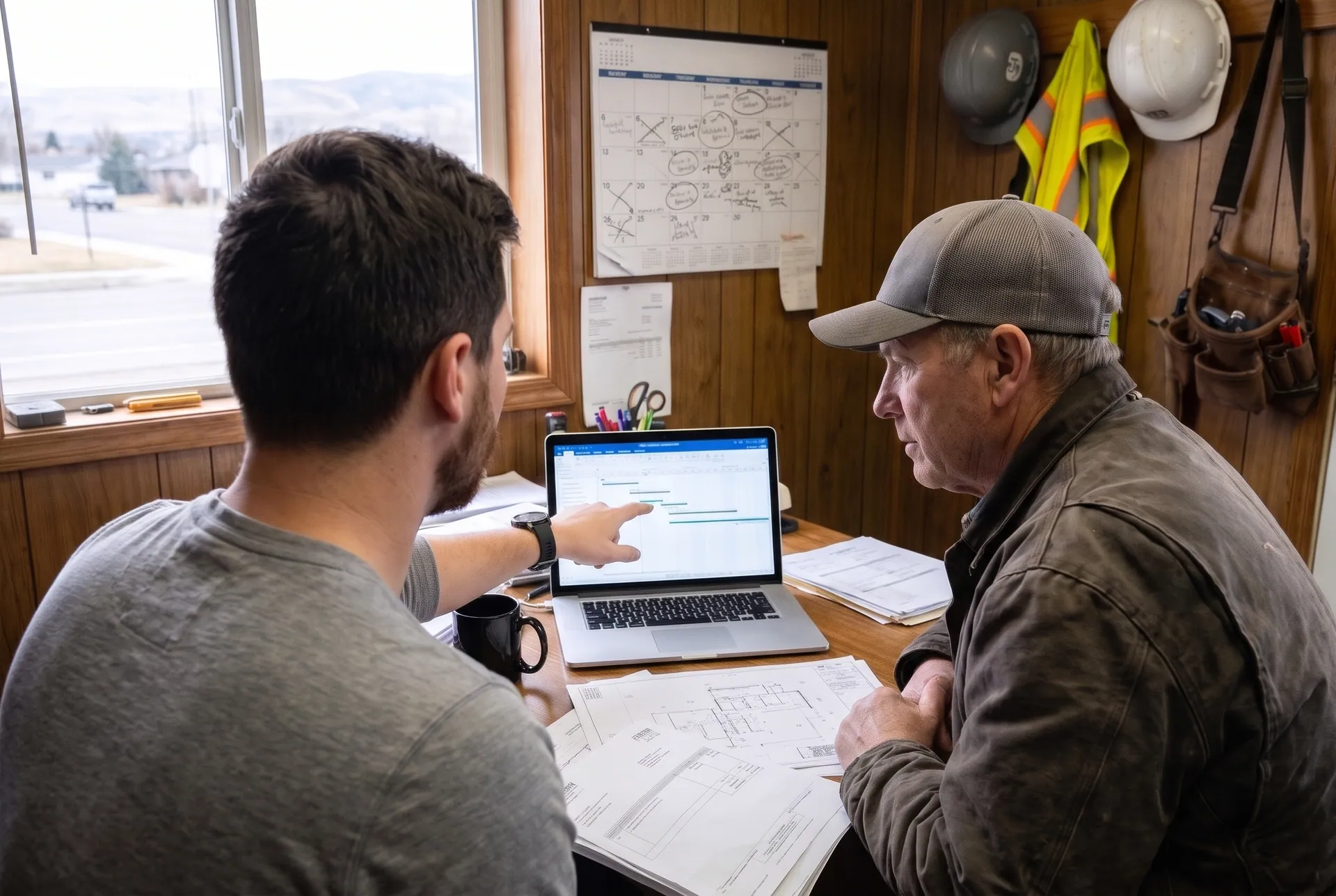
Steven Driggs going over the week's schedule with a contractor in his office

What you get

A short list of the right tools

Which tools fit your business and budget, and why. I start with what you already pay for. No more trial-and-error subscriptions, and no software I get paid to recommend.

You keep a one-page tool list with what each one is for.

A plan in the right order

What to hand off first, second and later, based on where your team really loses time. Easy wins go first, so people see it working before anything big changes.

You keep the plan, with an owner for each step.

Simple ground rules

Plain-English rules your team will follow. What's fine to use AI for, what stays out of it, and who checks the work before it reaches a customer.

You keep one page, written with your team.

A standing check-in

The tools change every month. We meet each month to see what's working and fix what isn't. You don't have to keep up alone.

You keep notes and next steps after every meeting.

How it works

One plan, rolled out at a pace your team can keep up with.

  1. Steven Driggs at a front desk, learning how a request moves through the office

    1. Watch how work moves

    I spend time with you and your team to see how a request turns into a finished job. Who takes the call, who writes the quote, who books the work, who sends the invoice. This is where the lost hours show up, usually in the handoffs between people.

  2. Steven Driggs showing a shop owner one job set up on the counter laptop

    2. Prove one job first

    We pick one job that wastes the most time and fix it, small and fast. Maybe it's drafting replies to the same customer questions, or turning job notes into a quote. If it doesn't save time, we know within weeks, and we've risked very little.

  3. Steven Driggs walking a small team through the ground rules on one page

    3. Roll it out to the team

    Once the first job works, we show the rest of the team. Short hands-on sessions on their own work, with the ground rules in place. Nobody gets a tool dropped on them without knowing why.

  4. An owner on a monthly video check-in with Steven Driggs

    4. Keep it running

    Monthly check-ins keep the plan current. New tools get tested before anyone pays for them. And everything we build stays yours, written down so your team can run it without me.

I don't sell software. I help your team use what you already pay for.

I don't take commissions or push a platform. I'll tell you which tools I like and why, and when the free version is enough. If AI isn't the right answer for something, I'll say so and suggest what is.

See the tools I use

Signs your team needs a plan

  • Your team uses three different free chatbots, and nobody knows what went into them
  • You pay for tools that nobody opens
  • The same customer question gets answered five different ways
  • Quotes sit in someone's inbox for days
  • New hires take weeks to learn how things are done
  • Someone has sent you a list of "20 AI tools you should be using"

Each of these is a process problem first. The fix starts with how the work flows, and then we pick the tool that fits. Often it's one you already have.

If two or three of these sound familiar, a short plan will save your team more time than any new app.

Guidance or mentorship?

Guidancefor the business

Who it's forOwners with staff who want everyone working the same way

What you getA short tool list, a plan in the right order and ground rules for the team

How it runsA check-in every month to see what's working and fix what isn't

What it costsA monthly agreement, priced on the call

Mentorshipfor you

Who it's forSolo owners, and owners who want to learn it before the team does

What you getYour own skills, built on your real work

How it runsOne job a week, with me beside you

What it costsFrom $979 a month for 1:1

Many owners start with mentorship and move to Guidance once the team is ready. A few do both. On the call I'll tell you which one I'd pick for your business. See mentorship

Where I've done this before

I spent more than six years in Microsoft consulting, rolling tools out to teams in nonprofits, financial firms, education tech and mining. The lesson from all of it: a tool only works when the people using it understand why. That's why every rollout starts with your team. More about me

Where a small business consultant fits

Small business owners in Idaho have good free help, and you should use it. The Small Business Development Centers (SBDC) network, funded in part by the U.S. Small Business Administration, gives free advising across the state.

  1. 01 What the SBDC does well

    Business plans, loans, financial planning, marketing strategies and startup questions. If you're opening a new business, the Idaho SBDC is a strong first stop.

  2. 02 What I do

    I'm an independent consultant, not a consulting firm. My consulting services start after the plan is written: how your team works each day, which tools fit and simple rules for using them. That's business management at the level of email, quotes, scheduling and social media posts.

  3. 03 Why not a big consulting firm?

    A large consulting firm sells strategic planning to companies with hundreds of staff. A small business needs someone who sits with the team, fixes one job and checks that it worked. My consulting business is built for teams of two or more, and it works well alongside what the SBDC gives you.

  4. 04 Background and certifications

    I hold Microsoft Power Platform and Anthropic certifications. I have six years of consulting behind me, with nonprofits, financial firms, education tech and mining companies. Entrepreneurs and long-running teams both fit.

Questions about Guidance

Want your team trained first? A team workshop is a good place to start, and it can lead straight into Guidance.

What does a small business consultant do?

I look at how work moves through your business, find where your team loses time, and help you fix it in order. AI tools are often part of the fix. Sometimes a better form or checklist is the answer instead.

Will you make us buy new software?

No. I start with what you already pay for, like Microsoft 365 or Google Workspace, which often include AI tools you aren't using. I'll tell you when the free version is enough.

How much does Guidance cost?

It's a monthly agreement, priced on the call once I know the size of your team and what you want fixed. You'll know the price before you commit.

How long before we see a result?

The first job should be done within the first few weeks. If it doesn't save your team time, we change course before going further.

What happens if we stop?

You keep everything: the tool list, the plan, the ground rules and every template we built. Nothing depends on me to keep running.

Do you work with teams outside Idaho Falls?

Yes. I come to offices across Eastern Idaho, from Rexburg to Pocatello, and work with teams anywhere over video. Most check-ins happen on video anyway, so distance rarely matters after the first visit.

Is our business information safe?

We write the rules for that first. What can go into an AI tool, what never does, which settings to change, and who checks work before it leaves the office.

Tell me about your week

Four quick taps, then I'll send you a time for a 20-minute call.

What eats most of your week?
Who is it for?
How should we meet?
When do you want to start?

Step 1 of 2

A shop owner talking through her week with Steven at her office desk

"Tell me how your week runs. If I can't help, I'll say so."

Steven Driggs, Starlene Consulting